A lawsuit doesn’t care how small your business is. One customer injury, one professional mistake, or one cyberattack can wipe out years of hard work if your insurance strategy doesn’t match your business structure. That’s where many entrepreneurs get it wrong. They assume an LLC automatically shields them from every financial threat or believe a sole proprietorship doesn’t need meaningful insurance because it’s “just a small business.”
Neither assumption survives real-world claims.
The legal structure you choose changes how liability is handled, how assets are exposed, and which insurance policies deserve priority. While both LLCs and sole proprietors face many of the same operational risks, the financial consequences—and the insurance strategy behind them—look very different.
This guide breaks down those differences in practical terms, helping experienced business owners build smarter protection rather than simply buying more coverage.
Why Business Structure Changes Your Insurance Strategy
Insurance doesn’t replace your legal structure. It complements it.
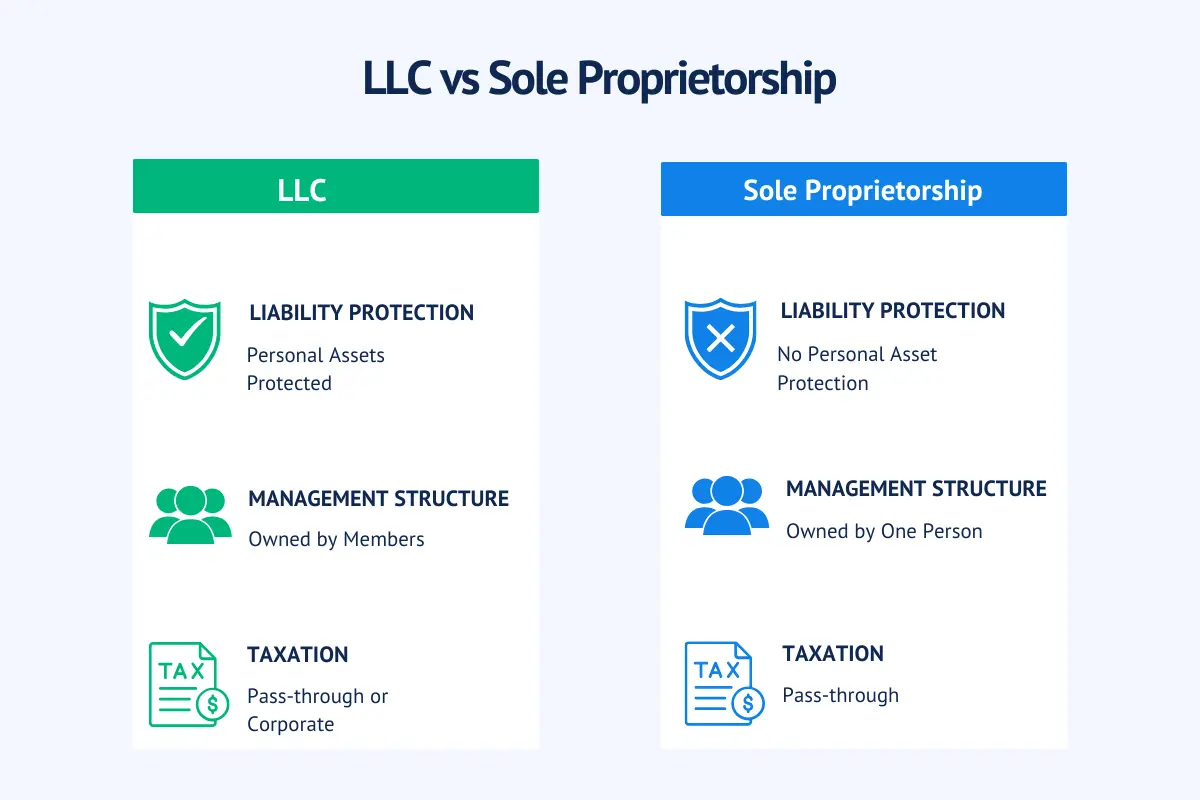
An LLC creates a legal separation between business assets and personal assets under normal operating conditions. A sole proprietorship does not. The owner and the business are legally the same entity.
That distinction changes how insurers evaluate risk and how business owners should prioritize coverage.
Insurance exists to pay covered claims before those claims become business-ending financial events. The right combination of policies reduces both legal exposure and operational disruption.
When evaluating insurance, think in layers:
- Legal protection from your business structure
- Financial protection from insurance
- Operational protection through risk management
Ignoring any one of those layers creates unnecessary vulnerability.
LLC vs Sole Proprietor: Risk Exposure Comparison
| Risk Category | Sole Proprietor | LLC |
|---|---|---|
| Personal liability | Very High | Lower (subject to legal exceptions) |
| Business debt protection | None | Generally protected |
| Personal asset exposure | Direct | Usually separated |
| Insurance importance | Essential | Essential |
| Legal defense costs | Paid by owner unless insured | Paid through insurance if covered |
| Business continuity after lawsuit | Lower | Higher with proper coverage |
| Credibility with commercial clients | Moderate | Often stronger |
Legal separation does not eliminate liability. Courts may still hold LLC owners personally responsible in cases involving fraud, negligence, personal guarantees, or failure to maintain proper corporate formalities.
[Insert Authority Link Here: U.S. Small Business Administration Business Structures]
Insurance Every Sole Proprietor Should Consider
Many sole proprietors underestimate their exposure because they operate alone or from home.
That creates a dangerous blind spot.
Your personal savings, home equity, investments, and future earnings may all become targets if a major judgment exceeds your available resources.
General Liability Insurance
This is often the first policy every sole proprietor purchases.
It typically covers:
- Customer bodily injury
- Property damage
- Legal defense costs
- Advertising injury
- Certain third-party claims
For businesses interacting with clients in person, this policy forms the foundation of risk management.
Professional Liability Insurance
Consultants, designers, accountants, marketers, developers, coaches, and freelancers often face their greatest risk from advice rather than physical accidents.
Professional liability insurance—also called Errors and Omissions (E&O)—helps cover claims involving:
- Professional negligence
- Missed deadlines
- Incorrect recommendations
- Financial losses caused by professional services
Many lawsuits involve dissatisfied clients rather than actual mistakes.
Business Property Insurance
Even home-based businesses own valuable assets.
Coverage may include:
- Computers
- Photography equipment
- Inventory
- Office furniture
- Specialized tools
- Production equipment
Homeowners insurance rarely provides adequate protection for commercial property.
Cyber Liability Insurance
Small businesses increasingly attract cybercriminals because security budgets are often limited.
Cyber policies may help cover:
- Data breaches
- Customer notification costs
- Ransomware recovery
- Digital forensic investigations
- Legal expenses
- Business interruption
One compromised laptop can create six-figure expenses.
Insurance Priorities for LLC Owners
An LLC changes legal exposure, not operational risk.
Customers can still sue.
Employees can still get injured.
Hackers still target databases.
Professional mistakes still happen.
Insurance remains necessary because legal defense costs alone can become financially overwhelming.
Commercial General Liability
Most LLCs begin with commercial general liability insurance.
Many landlords, suppliers, and commercial clients require proof of this coverage before signing contracts.
Commercial Property Insurance
Growing LLCs often lease office space, warehouses, or retail locations.
Property insurance helps protect:
- Buildings (when owned)
- Inventory
- Machinery
- Office equipment
- Furniture
- Business interruption losses
Replacing operational assets quickly helps minimize revenue disruption.
Workers’ Compensation
Hiring employees creates an entirely different category of exposure.
Workers’ compensation generally covers:
- Medical treatment
- Lost wages
- Rehabilitation
- Workplace injuries
State laws determine when this coverage becomes mandatory.
[Insert Authority Link Here: State Workers’ Compensation Requirements]
Directors and Officers (D&O) Insurance
Many owners assume D&O insurance only applies to large corporations.
That is no longer true.
Growing LLCs with investors, advisory boards, or multiple managers often purchase D&O coverage to protect leadership decisions from certain legal claims.
Common Policies Needed by Both Business Structures
Some risks exist regardless of legal structure.
Commercial Auto Insurance
Personal auto insurance frequently excludes business-related driving.
Businesses using vehicles for deliveries, client visits, or equipment transport should evaluate commercial coverage.
Business Interruption Insurance
Revenue stops quickly after disasters.
Business interruption insurance can replace lost income during covered events while helping pay continuing expenses like:
- Payroll
- Rent
- Loan payments
- Utilities
Cash flow protection often determines whether a business survives a prolonged shutdown.
Umbrella Liability Insurance
Large lawsuits sometimes exceed primary policy limits.
Umbrella insurance adds another layer of liability protection above qualifying policies.
Many experienced business owners consider umbrella coverage relatively inexpensive compared with potential litigation costs.
Industry-Specific Insurance Needs
Business structure matters.
Industry risk matters even more.
Contractors
Often require:
- General liability
- Inland marine insurance
- Commercial auto
- Workers’ compensation
- Equipment coverage
Consultants
Often prioritize:
- Professional liability
- Cyber insurance
- General liability
E-commerce Businesses
Frequently need:
- Product liability
- Cyber liability
- Inventory protection
- Cargo coverage
- Business interruption insurance
Healthcare Professionals
Common coverage includes:
- Professional malpractice
- Cyber liability
- Employment practices liability
- General liability
Industry-specific endorsements frequently provide better protection than generic business owner packages.
Cost Differences Between LLC and Sole Proprietor Insurance
Insurance companies rarely base premiums solely on business structure.
Pricing usually depends on several variables:
- Annual revenue
- Payroll
- Industry classification
- Claims history
- Number of employees
- Physical location
- Coverage limits
- Deductibles
An LLC does not automatically receive lower premiums.
A sole proprietor does not automatically pay more.
The insurer evaluates operational risk far more heavily than entity type.
Mistakes Business Owners Make
Experienced insurance professionals repeatedly see the same issues.
Assuming an LLC Eliminates Personal Risk
Legal protection has limits.
Personal guarantees, tax obligations, fraud, and personal negligence can still expose personal assets.
Insurance fills gaps that legal structures cannot.
Buying Only the Cheapest Policy
Low premiums often mean:
- Lower limits
- More exclusions
- Higher deductibles
- Missing endorsements
Cheap insurance frequently becomes expensive during claims.
Ignoring Cyber Risk
Even businesses with five employees store valuable information.
Payment details.
Client records.
Employee files.
Contracts.
Attackers don’t care whether your business generates $100,000 or $100 million annually.
Never Reviewing Coverage
Businesses evolve.
Revenue grows.
Equipment changes.
Employees are hired.
New services launch.
Insurance purchased three years ago may no longer match current operations.
Annual policy reviews reduce costly coverage gaps.
Choosing Coverage Based on Business Growth
Insurance should grow with your company.
Startup Phase
Prioritize:
- General liability
- Professional liability (if applicable)
- Business property
Growth Phase
Add:
- Cyber insurance
- Commercial property
- Business interruption
- Workers’ compensation
Expansion Phase
Evaluate:
- Umbrella liability
- Employment practices liability
- Directors and Officers insurance
- Commercial crime coverage
Insurance should evolve alongside operational complexity.
[Insert Authority Link Here: National Association of Insurance Commissioners Small Business Insurance Guide]
Building a Smarter Risk Management Strategy
Insurance works best when paired with operational discipline.
Business owners should regularly:
- Document contracts carefully.
- Maintain accurate financial records.
- Implement cybersecurity controls.
- Train employees on safety procedures.
- Review policy limits every year.
- Report operational changes promptly to insurers.
These practices often reduce claim frequency while improving underwriting outcomes.
The Verdict
The debate isn’t whether an LLC or sole proprietorship needs insurance. Both do. The real question is whether your insurance reflects your actual exposure rather than your assumptions.
A sole proprietor faces direct personal financial risk, making comprehensive liability protection especially valuable. An LLC provides meaningful legal separation, yet lawsuits, cyber incidents, employee injuries, and professional mistakes can still threaten the business itself.
The smartest owners don’t chase the lowest premium. They build a layered strategy where legal structure, insurance, contracts, and operational controls work together. Review your policies at least once a year, compare coverage against current operations, and adjust before growth creates new risks that your existing insurance no longer addresses.
Frequently Asked Questions
Does forming an LLC reduce my insurance costs?
Not necessarily. Premiums are primarily based on industry, revenue, payroll, claims history, and operational risk rather than business structure alone.
Can an LLC owner still lose personal assets?
Yes. Courts may impose personal liability in cases involving fraud, personal negligence, personal guarantees, or failure to maintain proper business formalities.
Is general liability insurance enough for most businesses?
Usually not. Many businesses also need professional liability, cyber insurance, commercial property coverage, or workers’ compensation depending on their operations.
Should freelancers buy professional liability insurance?
If clients rely on your expertise or advice, professional liability insurance is often one of the most valuable policies you can carry because many claims involve financial loss rather than physical injury.
How often should business insurance be reviewed?
At least annually, and immediately after major changes such as hiring employees, increasing revenue, expanding locations, introducing new services, or purchasing significant equipment.